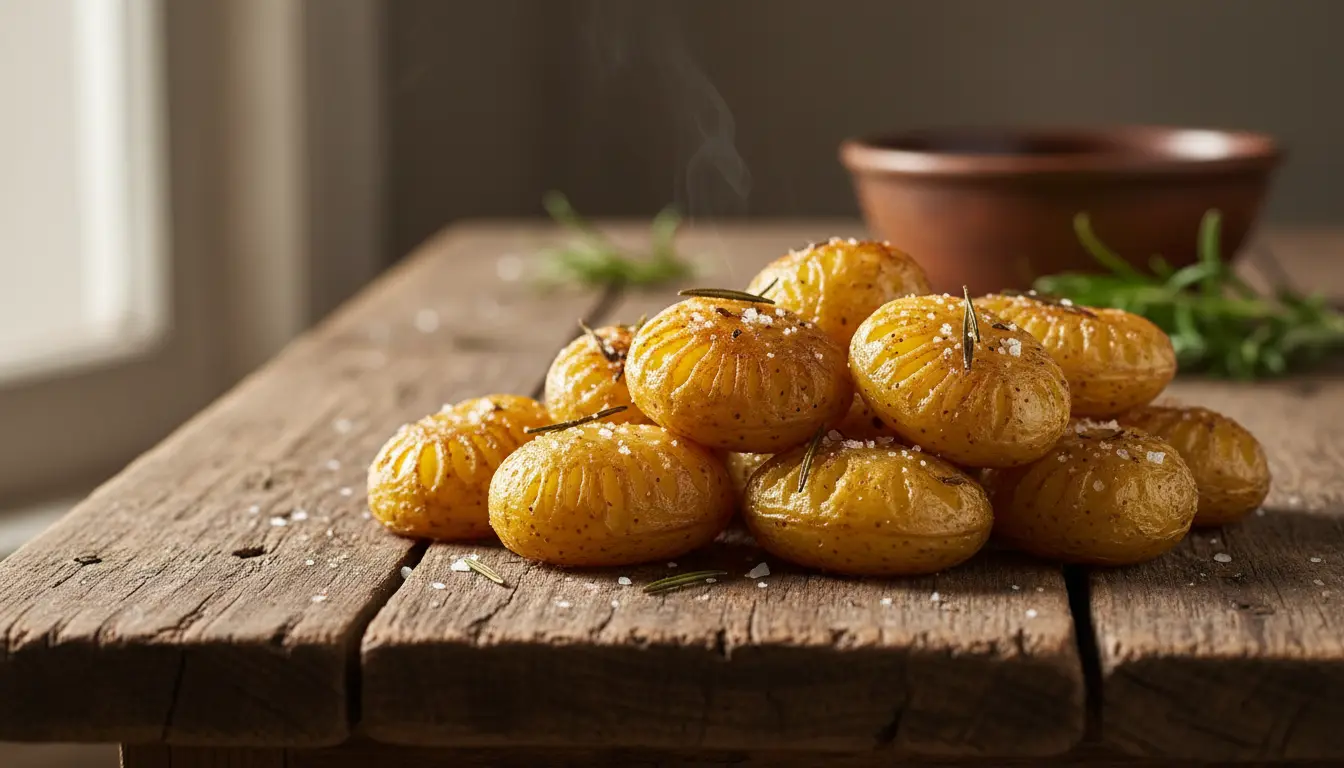
Why this trick works for perfect crispy potatoes
Getting perfect crispy potatoes is less about luck and more about controlling water, surface texture, and heat. The key trick combines a brief parboil, creating a rough surface, and high dry heat to form a stable crust.
Followable steps and a few timing rules let you repeat the result at home or in a small kitchen. The approach works for roasting, pan-frying, and air-frying.
Ingredients and tools for crispy potatoes
Use simple ingredients and common tools. The technique depends more on method than exotic ingredients.
- Potatoes: Yukon Gold or Maris Piper for roasting; Russet for extra fluffiness.
- Fat: neutral oil with a high smoke point (vegetable, canola) or stable fat (duck fat, clarified butter).
- Salt and optional aromatics: garlic, rosemary, or thyme.
- Tools: heavy baking tray or cast-iron skillet, pot for parboiling, slotted spoon.
Step-by-step method for perfect crispy potatoes
This step-by-step uses roasting as the baseline. You can adapt it to pan-fry or air-fry with small timing changes.
1. Choose and cut the potatoes
Pick medium-sized potatoes and cut them into even pieces so they cook at the same rate. Aim for 1 to 1.5 inch cubes or wedges for roasting.
Even size matters: too small and they over-crisp before the center is done; too large and the crust never forms.
2. Parboil and roughen the surface
Place potatoes in cold, salted water, bring to a simmer, and cook 6–8 minutes until the edges soften but the center is still firm. Drain thoroughly.
Transfer the drained potatoes to the pot or a colander and shake them gently for 30 seconds. This roughens the surface and creates tiny fractures that become crunchy when roasted.
3. Dry fully and preheat the pan
Moisture kills crisping. Pat potatoes dry with a clean towel and let them sit briefly to lose residual steam.
Preheat your baking tray or cast-iron skillet in the oven at 425–450°F (220–230°C). A hot surface sears quickly and prevents sticking.
4. Oil, season, and space out
Toss dried potatoes with a thin, even coating of oil and seasoning. Use just enough oil to coat the surfaces; too much leads to sogginess.
Spread potatoes in a single layer with space between pieces so hot air circulates freely.
5. Roast without crowding
Place the tray in the hot oven and roast for 25–35 minutes. Flip once or twice to burnish all sides. Increase heat briefly at the end if needed to finish browning.
Timing varies by oven and potato size; look for deep golden color and a firm crunch on the outside.
Variations and quick swaps
- Pan-fry: Use the same parboil and roughen steps, then fry in a hot skillet with enough oil to cover the base. Do not overcrowd the pan.
- Air-fry: Preheat the air fryer and use a light spray of oil. Shake the basket every 8–10 minutes.
- Herbs and finishes: Add fresh herbs and a sprinkle of flaky salt after cooking to preserve crispness.
Small checklist before cooking
- Even pieces
- Parboil 6–8 minutes
- Roughen by shaking
- Dry completely
- Hot tray or skillet
- Do not crowd
Roughening potato surfaces after parboiling increases their surface area and speeds up Maillard browning, which produces the desirable crispy crust and richer flavor.
Common mistakes that stop crisping
Several common errors prevent a good crust. Fixing these is often enough to convert a soggy result into perfect crispy potatoes.
- Overcrowding the pan — causes steaming not roasting.
- Insufficient drying — water creates steam and softens the outside.
- Too little heat — low temperatures will cook without browning.
- Excess oil — leads to greasy surfaces rather than crisp crusts.
Real-world example: neighborhood cafe test
A small cafe in Portland improved its roasted potatoes by standardizing the parboil and shake method. Before, batches varied and some trays were soggy.
After adopting the trick — 7-minute parboil, 30-second shake, hot sheet tray at 450°F — the kitchen saw consistent color and improved customer feedback. The new method reduced waste and doubled the number of perfect batches during brunch service.
Tips for scaling and timing
When cooking larger batches, use multiple trays and rotate them in the oven to avoid crowding. Preheat two trays so you can swap and keep heat consistent.
For prep-ahead service, parboil and dry potatoes, then refrigerate on a tray covered loosely. Roast from chilled; add a few extra minutes to reach full crispness.
Finishing touches for perfect crispy potatoes
Finish with flaky salt, a squeeze of lemon, or fresh herbs right after cooking. Avoid adding wet sauces until just before serving to preserve texture.
Serve immediately for best contrast between crunchy exterior and fluffy interior.
Summary: the single trick
The single trick is the combination: parboil to cook, roughen to create texture, and expose to high dry heat to form a crust. Control moisture, surface texture, and heat and you will get perfect crispy potatoes every time.
Use the checklist and small adjustments above to adapt this method to your equipment and taste.