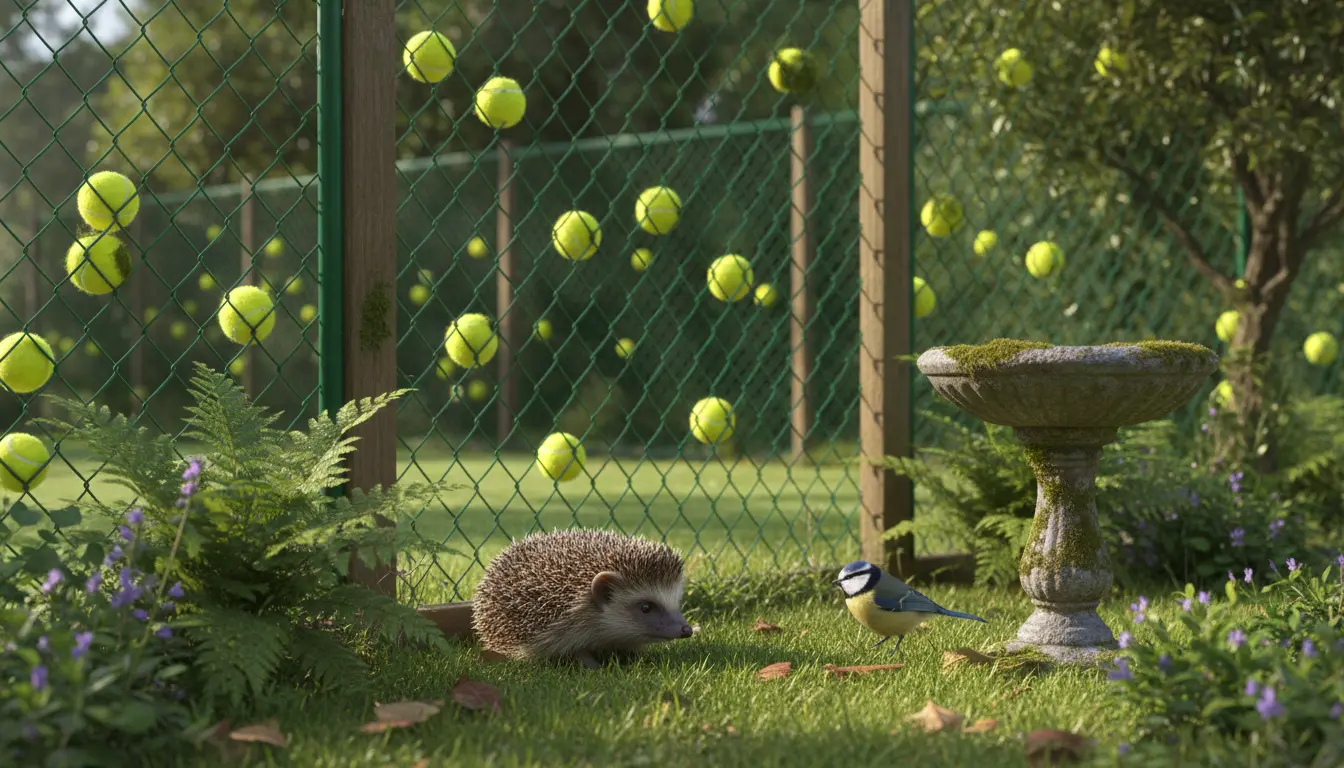
Why placing tennis balls in your garden helps protect birds and hedgehogs this season
Simple objects like tennis balls can become useful tools for wildlife protection in a garden. When used thoughtfully they improve visibility, soften sharp edges, and mark hazards so birds and hedgehogs are less likely to be injured or trapped.
How tennis balls make a difference for birds
Birds collide with netting, transparent barriers, and low-hanging wires because they do not see them. Bright, spherical objects such as tennis balls increase the visibility of these hazards and give birds time to alter course.
Stringing or attaching tennis balls at eye-catching intervals helps reduce collisions and entanglement without harming the animals.
How tennis balls help hedgehogs
Hedgehogs are vulnerable to sharp posts, open pits, and accidental contact with garden tools or machinery. Tennis balls provide a soft cap for exposed posts and can serve as visible markers for hedgehog highways and holes.
They are cheap, weather resistant, and easy to install so they suit many temporary and permanent protective measures.
Practical ways to use tennis balls in your garden
Below are specific, safe methods to apply tennis balls around common garden hazards. Follow the simple steps to make sure the placement is effective and wildlife friendly.
1. Make garden netting visible to birds
- Thread tennis balls onto string or fishing line and space them at 20 to 30 cm intervals across soft fruit netting.
- Place the line a little above eye level for flying birds so the balls break up the net silhouette.
- Use bright balls or add a small flag to each if your balls are faded.
This method reduces the chance of birds flying into invisible mesh and helps keep them from getting tangled.
2. Cap sharp posts and stakes
- Push a tennis ball over the end of exposed fence posts, rebar, or stakes where possible. Trim a small slit if needed to get a snug fit.
- Replace damaged balls that have split or hardened in the sun.
- For metal posts, consider a weatherproof glue inside the ball to secure it for a longer term fit.
Capping sharp ends prevents puncture injuries to hedgehogs that might squeeze under or around fences at night.
3. Mark hedgehog highways and holes
- Thread a few tennis balls on a low rope or place them beside authorised access gaps in fences to make the gap visible to family members and contractors.
- Add a colored string as a visual cue so strimmers and lawn mowers avoid the area.
Clear marking reduces accidental closure of hedgehog routes and limits the chance of garden maintenance harming small animals.
4. Prevent small animals falling into uncovered holes
- Place an upside-down tennis ball or several around small uncovered pits, drains, or compost bin openings as a temporary visual barrier.
- For deeper drains, fit a breathable cover or ramp as a safer long-term solution.
Tennis balls are not a permanent cover for deep holes, but they act as an inexpensive first step to draw attention to a risk.
Materials and tools you will need
- Tennis balls (new or gently used)
- Strong string, garden twine, or fishing line
- Scissors or a utility knife (use carefully)
- Optional: small drill, glue, or coloured tape
Only cut or drill balls when necessary and in a safe place. Discard damaged balls responsibly because pieces of foam can be ingested by wildlife.
Making garden netting more visible is one of the easiest ways to reduce bird entanglement. Small, brightly coloured markers placed every 20 to 30 cm make nets and lines easier for birds to see.
Quick step by step example
Here is a short, practical example you can try in one afternoon to protect birds around a soft fruit net and to cap fence posts against hedgehog injury.
- Collect 10 to 15 tennis balls and a length of string long enough to cross the net once.
- Make a small hole through each ball with a drill or carefully slice a slit so the line can pass through without splitting the ball.
- Thread the balls and tie the string to stable anchor points on either side of the net.
- Push spare balls onto any exposed fence posts by making a small cross-cut at the base of the ball and slipping it over the post.
- Check weekly that the balls are secure and replace any faded or broken ones.
Real world case study
A community orchard in a suburban area started receiving reports of small songbirds becoming tangled in late summer after a particularly busy fruiting season. Volunteers threaded 30 tennis balls onto ropes and ran these lines in front of the nets that covered raspberry beds.
Within two weeks the volunteers reported fewer entanglements and noticed birds investigating the nets from a safer distance. They also used spare balls to cap exposed wooden posts that hedgehogs frequently passed under, reducing accidental injuries during routine maintenance.
Tips and safety considerations
- Avoid small pieces coming loose. Inspect balls regularly and remove any fragments.
- Do not rely on tennis balls as the only solution. Where possible use wildlife-friendly netting and physical covers designed for animal safety.
- Replace faded balls that lose visibility. Bright colours are more effective.
- When cutting balls, do so away from pets and wildlife and dispose of cuttings responsibly.
Simple actions can cut the risk to birds and hedgehogs significantly. Tennis balls are an inexpensive and flexible option to add to a set of wildlife-friendly garden practices this season.