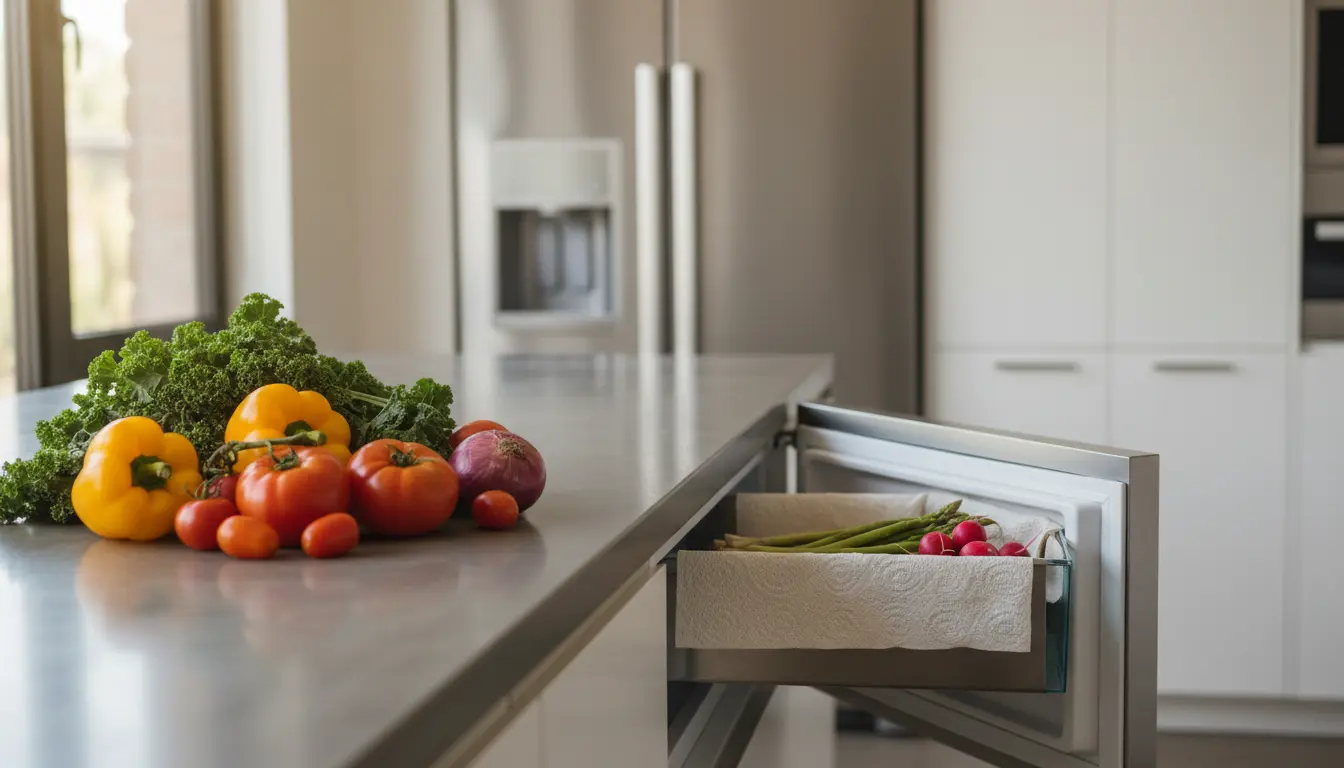
Keeping produce fresh without buying special containers is possible with one small, repeatable habit. This article explains the why, how, and which foods benefit most so you can waste less and save money.
Kitchen Habit That Keeps Food Fresh Longer
The habit is to add a dry paper towel or breathable liner to your produce drawers and storage containers. That small step controls excess moisture, which is often the main cause of rapid spoilage.
It takes only a minute when you put groceries away and works with what you already have at home. No expensive gadgets or plastic options are required.
How This Habit Keeps Food Fresh Longer
Fruits and vegetables release moisture and gases as they age. When moisture builds up, it creates the ideal environment for mold and soft spots. A paper towel absorbs extra water and reduces condensation.
That drier environment slows mold growth and bacterial activity. The paper towel also creates a small air gap that helps air circulate around the produce.
What You Need and Why It Works
- Paper towels or clean cotton dish towels: absorb moisture and are replaceable.
- Perforated liners or a breathable cloth: allow gas exchange while keeping surfaces dry.
- Clean, dry storage drawers or containers: starting dry maximizes effectiveness.
By managing moisture, you prevent softening, slippage, and fungal spores from taking hold. It’s a low-cost, low-effort barrier that complements normal fridge settings.
Step-by-Step: How to Use the Habit
- Wipe the drawer or container dry before adding food. A clean surface prevents early spoilage.
- Place a single layer of paper towel or a folded cotton towel at the bottom. For long drawers, use multiple towels spaced evenly.
- Arrange produce in a single layer when possible to improve air flow. Avoid overcrowding the drawer.
- Replace the paper towel when it becomes damp, typically every 2–4 days for high-moisture vegetables like greens.
- Wash any reusable cloth liners weekly and dry them completely before reuse.
This routine requires minimal time and delivers consistent results across many types of produce.
Foods That Benefit Most from This Kitchen Habit
Not every food needs the same treatment. Focus on items that spoil quickly and are sensitive to moisture:
- Leafy greens (lettuce, spinach, arugula)
- Herbs (cilantro, parsley, basil when refrigerated)
- Berries (strawberries, blueberries, raspberries)
- Soft vegetables (mushrooms, cucumbers, zucchini)
- Cut fruit (sliced apples, melons stored short-term)
Hardier produce like whole carrots, potatoes, and onions are less sensitive to surface moisture and benefit less from the paper towel approach.
Common Mistakes and How to Avoid Them
Some simple errors reduce effectiveness. Avoid these to keep the habit working well:
- Using wet towels — they spread moisture rather than absorb it. Always start with a dry towel.
- Overpacking drawers — crowding prevents air circulation and traps humidity.
- Never replacing towels — a saturated towel no longer protects produce and can smell.
Set a reminder on your phone if you find it hard to remember towel changes at first.
Practical Tips for Long-Term Use
- Keep a roll of paper towels near the fridge for convenience.
- Label reusable cloths and wash them in a hot cycle to remove bacteria.
- Combine with regular fridge cleaning to reduce hidden sources of moisture and smell.
Real-World Example: A Simple Case Study
Sara, a busy teacher, used to throw away a wilted bag of spinach every week. She started lining the produce drawer with paper towels and arranging spinach in a single layer. After one month she noticed the spinach stayed crisp an extra four days on average.
Her result: fewer grocery trips for greens and an estimated $10–$20 monthly savings on produce. She also spent less time prepping spoiled food and felt the change was worth the one-minute daily habit.
How to Track Your Own Results
Try a two-week before-and-after test. Note how many items you discard each week, and then add the paper towel habit for two weeks and compare. Track both weight and number of items to see real savings.
Small changes add up fast, and the habit is scalable for singles or large families.
Conclusion: Small Habit, Big Impact
Adding a dry paper towel or breathable liner to your produce drawer is a simple, affordable habit that keeps food fresh longer without special containers. The practice reduces moisture, slows mold growth, and can cut food waste and household spending.
Try it for a month and measure the difference. The habit fits easily into grocery routines and works with the foods you already buy.