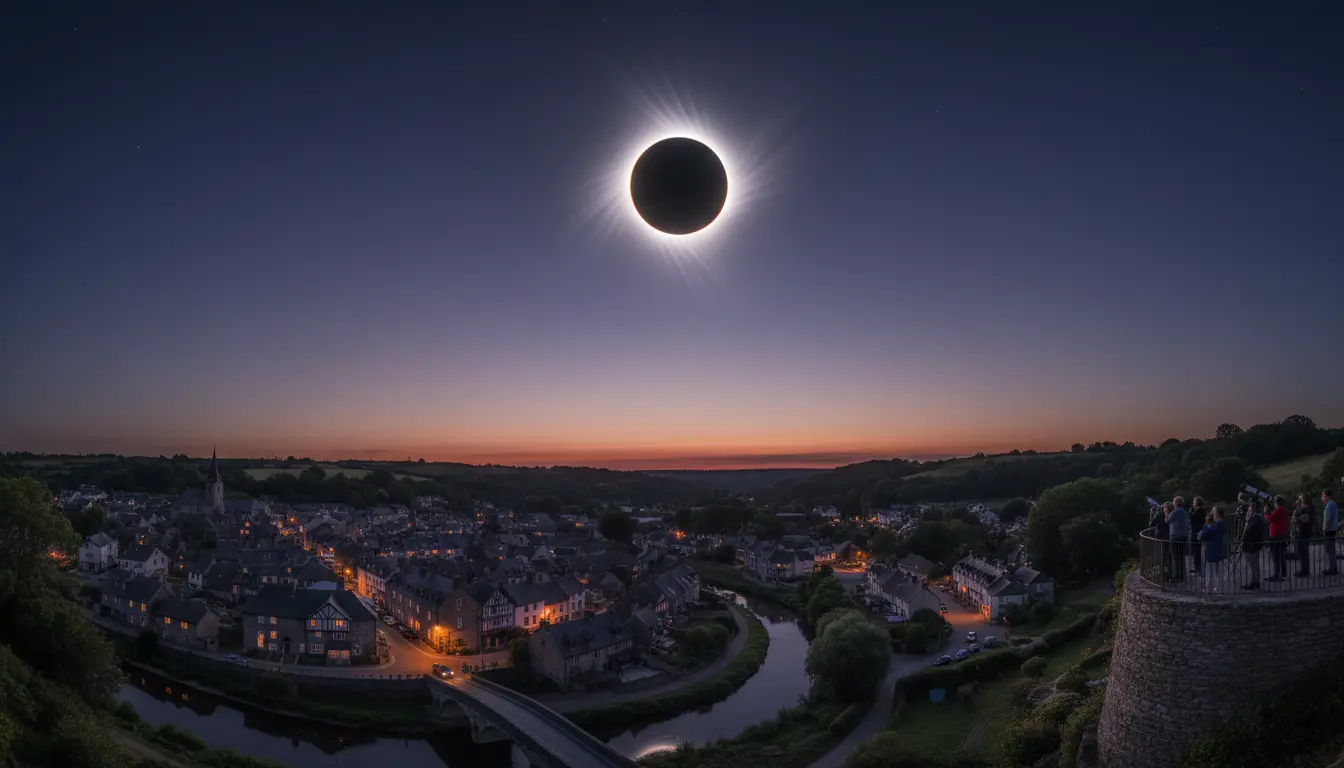
What to expect during Six Minutes of Night
A total solar eclipse that produces roughly six minutes of darkness is rare and dramatic. During that interval the sky can drop to twilight, stars and planets appear, and temperature can fall noticeably.
Understanding the sequence of events helps you prepare. The timeline includes partial phases, second contact (start of totality), totality itself, and third contact (end of totality).
Why Six Minutes of Night is special
Most total solar eclipses offer one to three minutes of totality for a given location. When totality stretches to around six minutes, the experience is longer, giving more time to take observations and photos, and to safely enjoy the view without haste.
Longer totality also amplifies atmospheric effects: shadow bands, a pronounced drop in temperature, and extended visibility of brighter stars and planets.
Key physical effects during totality
- Sudden drop in ambient light that resembles deep twilight.
- Temperature falls by several degrees in minutes.
- Rapid change in wind patterns as ground heating changes.
- Appearance of the solar corona visible to the naked eye.
How to prepare practically for the eclipse
Preparation reduces stress and increases safety. Plan logistics, gear, and timing ahead of the event.
Follow this checklist to prepare:
- Check exact local timing and duration for totality from an authoritative source.
- Scout locations early and pick an unobstructed viewing site with easy access.
- Pack water, snacks, sun protection, and layers to handle a rapid temperature drop.
- Bring certified solar viewers or solar filters for all optical equipment.
- Plan for traffic and parking; allow extra travel time before the eclipse.
Safety: Viewing and equipment
Never look directly at the Sun without approved solar filters before and after totality. During totality, the Sun is completely covered and it is safe to look briefly with the naked eye, but only while the Sun is totally obscured.
Use ISO-certified eclipse glasses (ISO 12312-2) or solar filters for cameras, binoculars, and telescopes. Remove filters only for the brief totality phase and replace them immediately when totality ends.
Camera and photography tips
- Use a stable tripod and practice framing in advance.
- Bracket exposures to capture the corona and landscape separately.
- Consider a remote shutter release to reduce vibration.
- Plan a sequence: partial phase shots, filtered close-ups, then unfiltered corona shots during totality.
What to record and observe during six minutes
Longer totality gives you time to do more than just look. Use a simple observation plan to capture the moment:
- Note ambient temperature and wind changes every minute.
- Watch for shadow bands on light-colored surfaces.
- Identify visible stars and planets; brighter objects like Venus may be visible.
- Listen for animal and human reactions—wildlife often changes behavior.
Shadow bands are faint ripples of light and dark that can appear just before and after totality. They are caused by atmospheric turbulence acting like a moving lens on the last sliver of sunlight.
Small real-world example: Park planning for a 6-minute totality
A regional park expected six minutes of totality and used a simple operations plan to manage visitors. The park designated viewing zones, staffed information booths, and issued free certified eclipse glasses at entry.
Volunteers guided visitors to clear sightlines and reminded people when to remove and replace filters. Medical staff was briefed on heat- and cold-related issues, and local authorities staged traffic control to avoid congestion after the event.
The result: a calm, safe viewing experience where observers could relax and take advantage of the extended totality to photograph the corona and perform timed observations.
Practical examples of observation schedules
Use a simple timeline to structure your actions. Below is a practical routine for a site with about six minutes of totality.
- -30 minutes: Arrive, set up gear, test cameras with solar filters.
- -10 minutes: Distribute viewers and review safety rules with the group.
- Second contact: Remove filters only when instructed; begin unfiltered viewing.
- Totality (approx. 6 minutes): Observe corona, photograph, note environmental changes.
- Third contact: Replace filters immediately and resume filtered observations.
Final practical tips
Keep your plan simple and flexible. If clouds move in, focus on the experience rather than perfect photos. If weather is clear, use extra time during six minutes to take more varied exposures and to let observers savor the event.
Most importantly, coordinate safety and logistics so the extended darkness is a memorable, secure, and well-documented experience for everyone involved.
Note: Check authoritative local sources for precise eclipse timing and official safety guidance for your location.