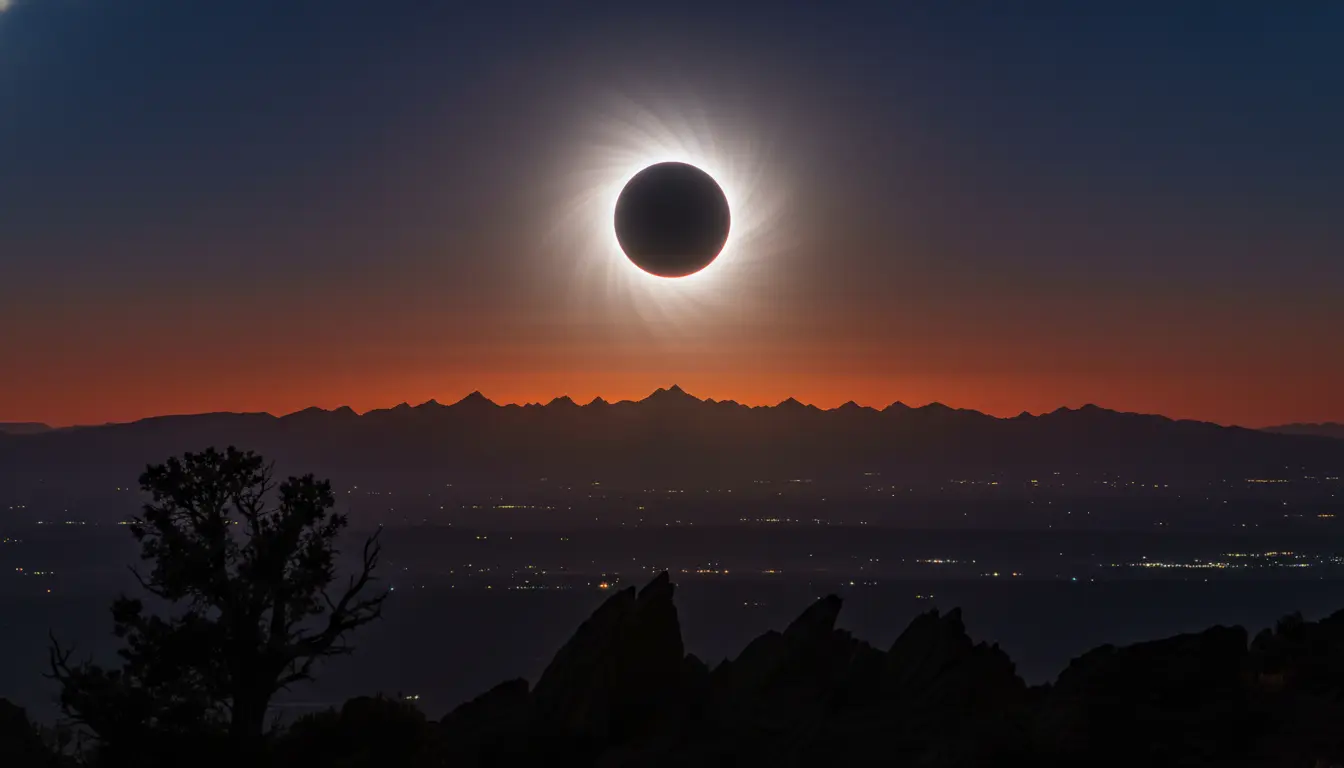
The sky will go dark during a total solar eclipse, and a long-duration event gives you extra time to experience it — but it also requires planning. This guide explains what to expect, how to stay safe, and how to get the most out of the longest total solar eclipse you may witness in your lifetime.
What a Long Total Solar Eclipse Means
A total solar eclipse occurs when the Moon completely covers the Sun. The longest total solar eclipse in a given period means a longer span of totality, the brief time the Sun is fully obscured.
Longer totality can last several minutes. That adds opportunities for observing the solar corona, photographing the event, and safely experiencing twilight-like conditions on the ground.
How duration affects your plans
Longer totality gives you more margin for viewing and capturing images. It also increases demand: more people plan trips, local services get busier, and weather plays a larger role.
Essential Safety: Viewing the Longest Total Solar Eclipse
Never look at the Sun without appropriate protection except during the few seconds of totality when the Sun is fully covered. Eye damage is immediate and irreversible.
- Use ISO 12312-2 certified eclipse glasses for partial phases.
- Use solar filters on cameras, binoculars, and telescopes until totality begins.
- Remove filters only during totality, then replace them immediately when totality ends.
Logistics and Travel Tips for the Longest Total Solar Eclipse
Expect high traffic and full accommodations near the path of totality. Plan travel and lodging well in advance and have backup plans for parking and food.
- Book lodging at least months ahead; consider nearby towns outside the immediate path.
- Arrive a day early to avoid day-of delays and to secure a good viewing spot.
- Pack emergency supplies: water, snacks, first-aid, sunscreen, and a charged power bank.
Weather planning
Weather is the biggest risk to viewing. Check long-range forecasts, but also have alternatives. Moving a short distance can sometimes clear clouds while still remaining inside the path of totality.
Viewing and Photography Tips for the Longest Total Solar Eclipse
A long totality gives you time to capture scientific and aesthetic moments. Prioritize safety, then plan the sequence of shots and observations.
- Practice exposure settings on the Sun before the eclipse using a solar filter.
- During totality, photograph the corona at multiple exposures to capture detail.
- Use a tripod for stability; use a remote shutter or timer to reduce vibration.
Suggested equipment checklist
- Eclipse glasses (one per person).
- Solar filters for any optical device.
- Camera, tripod, extra batteries, and memory cards.
- Wide-angle lens for landscape shots and a telephoto for the Sun.
- Binoculars with solar filters for quick views.
What to Expect During the Longest Total Solar Eclipse
Totality includes several predictable stages: Baily’s beads, the diamond ring, full totality with the corona visible, and the reverse sequence as the Moon moves on. A longer event stretches these moments, making them easier to observe.
Temperature can fall several degrees, wind patterns can change, and wildlife may behave as if night is falling. Expect a dramatic change in light and color across the landscape.
Practical Checklist for Eclipse Day
- Confirm location and arrival time; avoid last-minute rerouting.
- Have printed maps or offline GPS instructions in case cell service is congested.
- Bring emergency supplies and clothing for changing conditions.
- Assign roles if you are with a group: driver, photographer, safety officer.
The apparent size of the Moon compared to the Sun determines totality. Slight shifts in the Moon’s distance and orbit change the maximum duration of a total solar eclipse.
Real-World Case Study: Lessons from the 2017 U.S. Total Solar Eclipse
When the 2017 total solar eclipse crossed the United States, some towns saw visitor numbers increase tenfold. Local authorities and businesses quickly learned to manage traffic, supplies, and safety messaging.
Key takeaways included: set up designated viewing fields, coordinate with local law enforcement for traffic flow, and distribute free safety information and eclipse glasses. Residents who planned early had a smoother experience and safer events.
Final Tips for the Longest Total Solar Eclipse
Be ready to adapt. A longer totality gives you time, but only if you are prepared. Focus on safety first, then experience the event with a balanced mix of observation and photography.
Enjoy the rare spectacle. With sensible planning and the right gear, the longest total solar eclipse of our lifetime can be a memorable, safe, and educational experience.