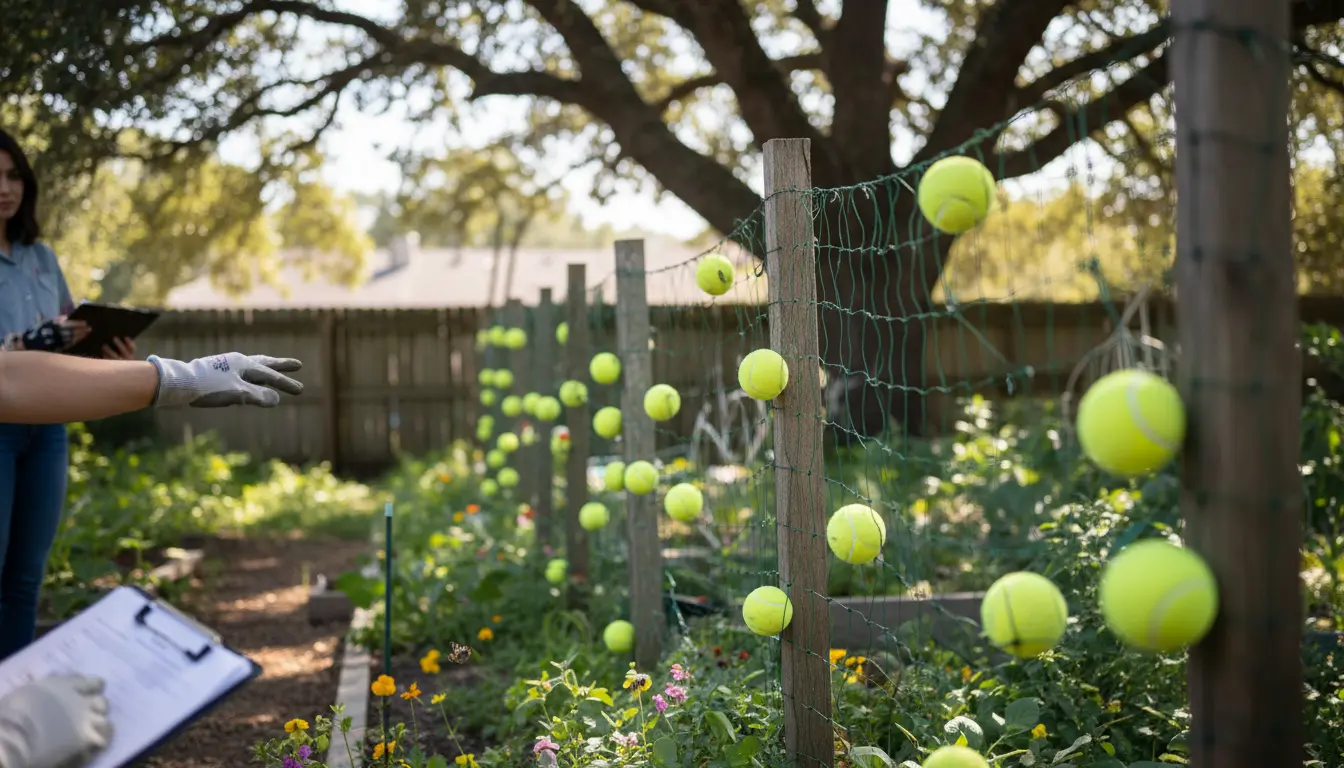
Winter brings extra hazards for small wildlife in gardens. Netting, open drains, and hidden holes can entangle or trap birds and hedgehogs when snow, leaves, or darkness make hazards harder to see.
Why keeping tennis balls in your garden helps protect birds and hedgehogs this winter
Old tennis balls are bright, lightweight and easy to attach to garden structures. Used correctly, they increase visibility of netting, cover sharp edges, and mark risky openings so wildlife can avoid them.
This article covers safe, practical steps you can take with spare tennis balls to lower accidental harm to birds and hedgehogs over the colder months.
How keeping tennis balls helps birds
Birds often become entangled in fruit netting and garden mesh because they don’t see the thin lines, especially in low light or when leaves are on the ground. Bright objects tied along the netting make the lines visible and give birds a chance to avoid contact.
- Attach tennis balls every 30–50 cm along netting to create clear visual markers.
- Use balls on washing lines or thin wires to prevent collisions in winter mornings and evenings.
- Cap the ends of garden stakes with tennis balls to stop birds perching on sharp tips and injuring themselves.
How keeping tennis balls helps hedgehogs
Hedgehogs move at night and may fall into garden holes, uncovered drains, or get trapped in loose netting. Tennis balls can mark or soften hazards, reducing the chance of injury.
- Place balls where there are sudden drops or uncovered holes so the area is more visible at night under torchlight.
- Cap sharp posts and metal rods to prevent puncture wounds if a hedgehog bumps into them.
- Use tennis balls to weigh down netting edges so small mammals don’t squeeze underneath and become stuck.
How to prepare and place tennis balls safely
Not every use of tennis balls is safe. Avoid stuffing balls into nests or leaving cut pieces in contact with animals. Follow these safe preparation steps.
- Clean used balls: brush off loose dirt and rinse in water. Allow to dry before placing in the garden.
- Do not shred or leave small pieces: keep balls whole so no loose fragments can be swallowed or cause choking.
- Attach securely: use string, zip ties or garden wire threaded through a small slit to fix the ball to netting or posts. Make sure attachments cannot tangle wildlife.
- Position thoughtfully: place markers at eye level for birds and near the ground to signal holes for hedgehogs. Check for any risk of entanglement after installation.
Keep a regular check on any tennis-ball markers during the season. Tighten or replace ties and remove balls if they become brittle or damaged.
Where not to use tennis balls
Avoid placing tennis balls directly inside nest boxes, feeders, or inside hedgehog nesting material. Synthetic rubber and dyes can be unpleasant or unsafe in enclosed micro-environments. Use balls only as external markers or protective caps.
Garden netting and loose materials are common causes of accidental harm to birds and small mammals. Simple visual markers can reduce entanglement incidents significantly.
Small case study: community garden project
A community garden in a mid-sized UK town fitted bright tennis-ball markers to fruit-netting and low wires around feeding stations one autumn. Volunteers attached balls every 40 cm and capped several low fence posts.
Over the winter the group recorded fewer reports of tangled birds and a volunteer hedgehog rescuer noted fewer rescue calls from the garden perimeter. The project organisers credited the improved visibility around netting for reducing accidents.
Practical checklist for gardeners
- Gather clean, whole tennis balls and spare ties.
- Mark netting, thin wires and low posts every 30–50 cm.
- Cap sharp stakes and exposed metal near hedgehog paths.
- Inspect markers weekly and remove damaged balls.
- Never place cut pieces where animals could ingest them.
Keeping tennis balls in your garden is a low-cost, low-effort way to make hazards more visible and reduce accidental harm to birds and hedgehogs. When used thoughtfully and inspected regularly, they are a practical addition to winter wildlife safety measures.
If you are unsure about a specific hazard, contact a local wildlife rescue or conservation group for tailored advice before making changes.