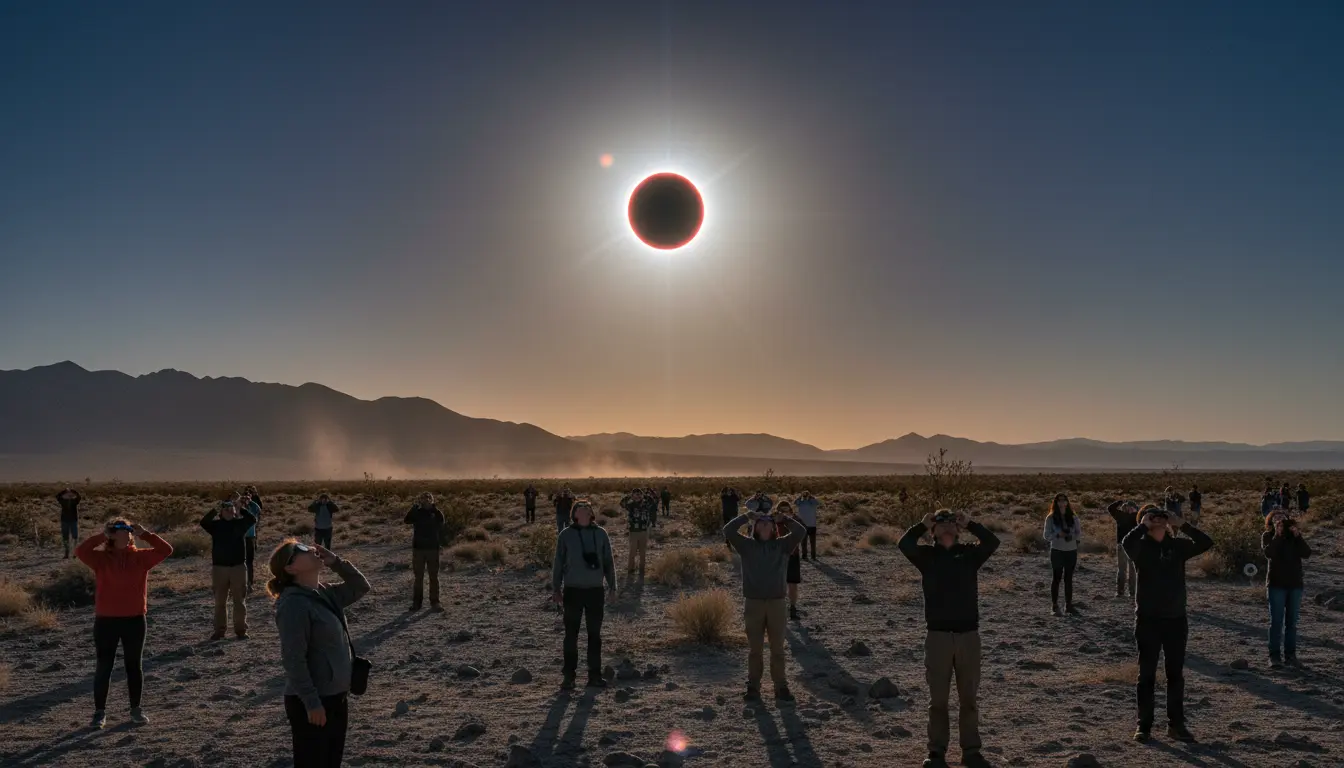
Solar eclipses are predictable and dramatic events, but some rare eclipses last much longer than the short totalities most of us see in our lifetime. This guide explains what to expect, how to prepare, and how to view the eclipse safely using certified eclipse glasses.
The Eclipse That’s Longer Than Any in Your Lifetime: What to Expect
When astronomers describe an eclipse as unusually long, they mean the total or annular phase lasts significantly longer than typical events. Long eclipses are rare because they depend on precise alignments of Earth, Moon, and Sun.
You may notice a longer period of twilight, deeper color shifts in the sky, and extended opportunities to observe features like the solar corona. That makes planning and safety even more important.
Why some eclipses last longer
Duration depends on three main factors: the Moon’s distance from Earth, Earth’s distance from the Sun, and where you stand relative to the centerline of the eclipse path.
- The Moon near perigee (closer to Earth) casts a wider shadow and can increase totality time.
- Earth near aphelion (farther from the Sun) makes the Sun appear slightly smaller, lengthening totality.
- Being on the centerline of the path gives the longest possible view.
Eclipse Glasses: How to Use Them Safely
Direct solar viewing can cause permanent eye damage. Proper eclipse glasses or handheld solar viewers are essential any time you look at the Sun outside of brief totality phases.
Follow these simple rules to protect your eyes:
- Only use glasses that meet the ISO 12312-2 safety standard.
- Inspect glasses for scratches, tears, or damage before use.
- Wear glasses whenever any part of the Sun is visible; remove them only during the brief period of totality when the Sun is completely covered.
- Do not use sunglasses, smoked glass, or unverified filters as substitutes.
Step-by-step viewing routine
Use this routine on the day of the eclipse to stay safe and get the most from the experience:
- Put on certified eclipse glasses before looking up at the Sun.
- Look away if you feel any discomfort and recheck the glasses for damage.
- When totality begins (if you are in the path), remove glasses for the short period and enjoy the corona with the naked eye.
- When the Sun begins to reappear, immediately put glasses back on.
Where to See the Longest Eclipse and Planning Tips
Long eclipses attract tourists and sometimes require travel to be in the path. Planning for location, weather, and timing improves your chances of a memorable viewing.
Key planning steps include choosing a viewing site, checking historical cloud cover, and bringing a basic kit.
- Check multiple weather sources for the day and week before the eclipse.
- Plan travel with extra time to avoid traffic and last-minute shortages of glasses.
- Bring layers, water, a hat, sunscreen, and a chair for comfort during long waits.
- Consider joining a local astronomy club event for expert guidance.
What to pack for an extended viewing
- Multiple pairs of certified eclipse glasses.
- Binoculars or telescopes only with approved solar filters on the front end.
- Camera with solar filter if you plan to photograph the event.
- Food, water, portable shade, and a charged phone for emergencies and timing updates.
Some of the longest total solar eclipses last over six minutes, but these occur along narrow paths and are separated by decades or centuries. Even partial phases before and after totality can last hours, so most of your day will be eclipse-related.
Real-World Case Study: Planning for a Long Eclipse
In 2017, many communities along the U.S. path saw large visitor numbers for the Great American Eclipse. One small town organized viewing parks, distributed certified glasses from local sponsors, and set up timed talks by amateur astronomers.
The planning reduced crowd confusion and kept viewers safe. Local businesses benefited, but organizers emphasized safety training and clear public messages about when to use glasses and when to remove them.
Lessons from the case study
- Early distribution of certified glasses prevents last-minute unsafe alternatives.
- Simple signage about viewing routines reduces the risk of accidental eye exposure.
- Community coordination with emergency services and road authorities helps manage traffic and health issues.
Final Checklist Before the Eclipse
Use this short checklist the day before and the morning of the event to avoid surprises.
- Verify you have at least two pairs of ISO-certified eclipse glasses per person.
- Confirm your exact location and the eclipse times for that spot using a reliable astronomy source.
- Pack a kit with water, snacks, a hat, sunscreen, and a blanket or chair.
- Charge devices and download offline maps in case of poor signal.
With careful planning and the right equipment, a long eclipse can be a safe, awe-inspiring event. Prepare early, use certified eclipse glasses, and prioritize your viewing location. When the Sun finally slips behind the Moon, you want to be relaxed and ready to enjoy every rare minute.